
A Hummingbird Is Unforgettable
By Lauren Morse
(October 9, 2026)
A hummingbird is unforgettable — a miracle, even. Dazzling iridescence. Fierce beauty. Extraordinary endurance they draw on to migrate thousands of miles. When you see a hummingbird, especially when you see one in Jersey City, that moment becomes ingrained in your memory. You try to take a photo or video. You tell people about it. You remember those few seconds clearly and joyfully.
A dead hummingbird, stripped of that dynamic grace, is devastating. It’s a tiny body rigid on the sidewalk, beak ajar, slender tongue sticking out, a sticky pool of blood underneath. And yet the dazzling sheen remains.
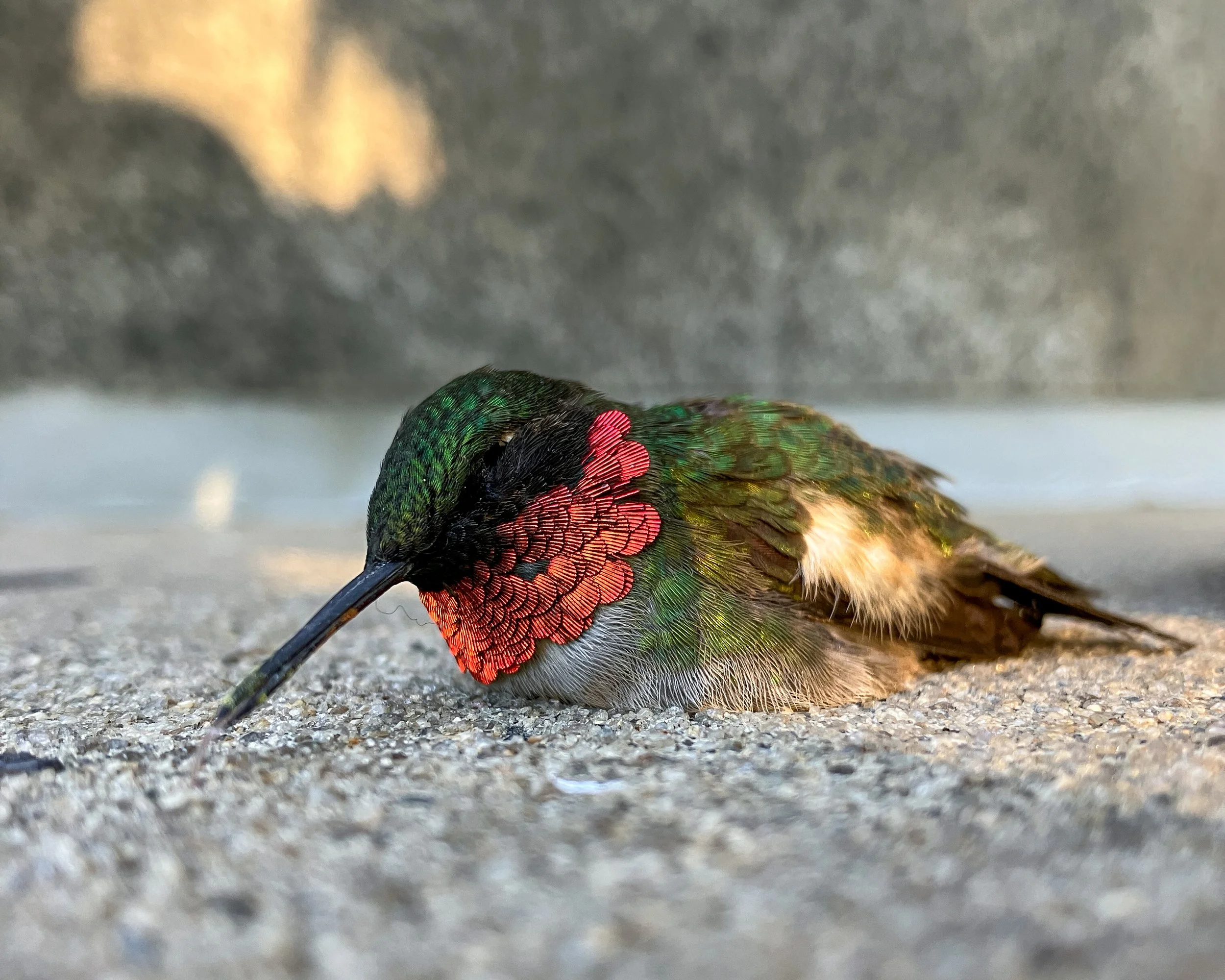
I found one in Newport, where I caught a gleam of ruby red on the side of a mostly white throat. I wondered if he was a juvenile male, headed out on his first journey south.
His mother would have built a delicate nest from spiderweb and lichen. She would have incubated him and hustled to feed his growing body with nectar and tiny insects, doing everything she could for him. She poured her time and energy into his future. She did her job. She sent her healthy, gorgeous baby out into the world. And, shortly afterward, he died on our streets, for no good reason at all.
This fall, we’ve found six Ruby-throated Hummingbirds already dead in Jersey City. Two more were found alive after striking windows, but neither ultimately survived.
They died because of buildings. They died because reflective glass can look like safety, like habitat, like open sky. They died because too many buildings still haven't fixed those deadly expanses of glass yet.
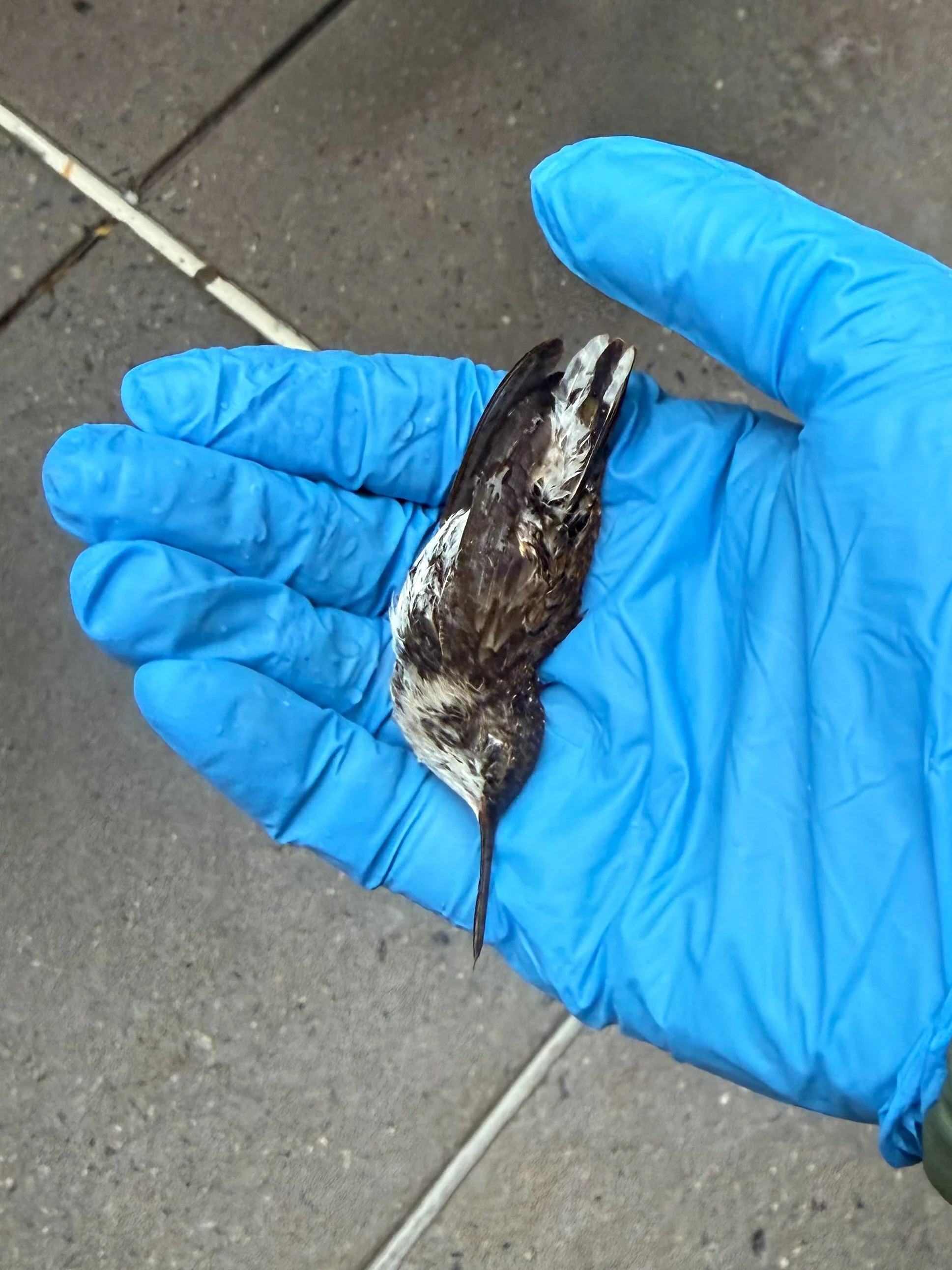
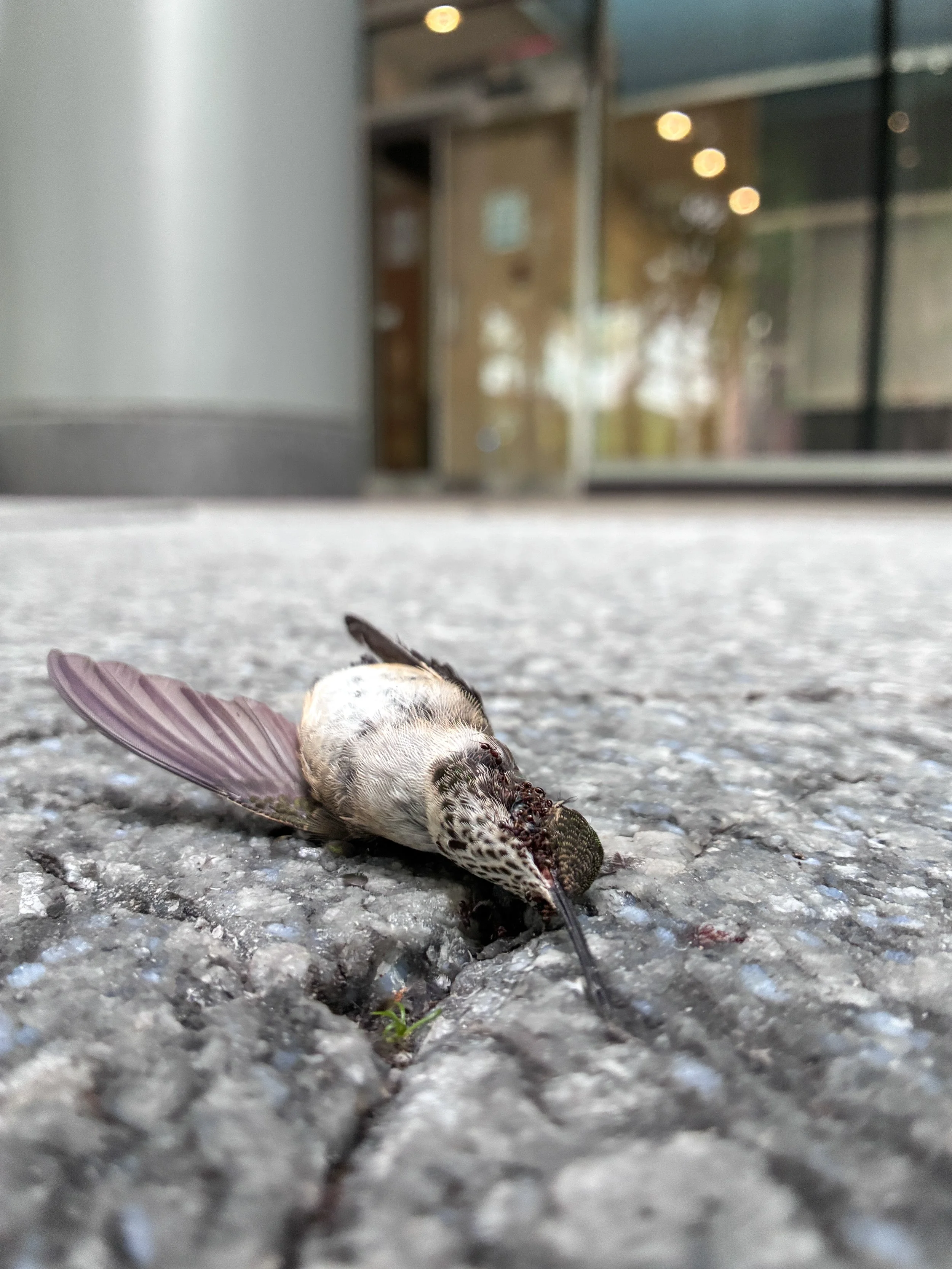
All of these hummingbirds deserved better. And we know how to make things safer.
If you live or work in a glass-heavy building, you can be a catalyst for change. Talk with building management about effective collision-prevention treatments such as Feather Friendly window markers. Jersey City Birds is also happy to help explain the problem and share information about solutions.
At home, you can make your own windows safer by using effective exterior treatments such as insect screens, properly spaced window markers, or Acopian BirdSavers.
Bird collisions are preventable. We have the solutions we need. The birds making these extraordinary journeys need us to use them.
Lauren Morse is Director of Strategic Initiatives for Jersey City Birds and a volunteer with the For the Birds collision monitoring project.
Jersey City Birds volunteers will continue fall collision monitoring through November 1. Donations help support the supplies and resources needed for this work, as well as our efforts to protect birds and their habitats throughout Jersey City.